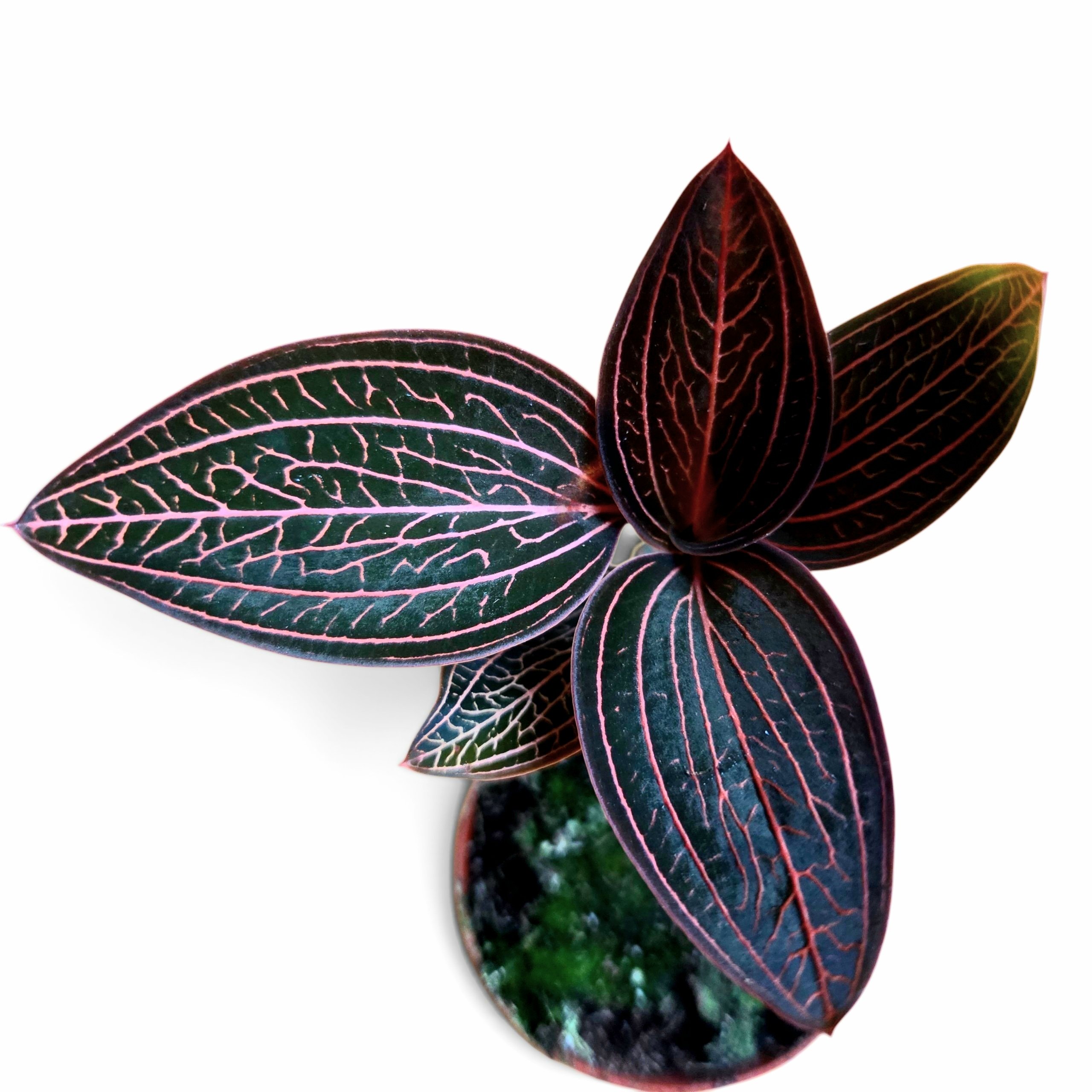
🌿 Anoectochilus chapaensis – jewel orchid with shimmering leaf veining
Special features of Anoectochilus chapaensis
The Anoectochilus chapaensis is one of the sought-after jewel orchids and is especially prized for its extraordinary leaves. The velvety dark green to deep brown leaf surface is crisscrossed by a delicate network of gold to copper-colored veins that shimmers metallically depending on the light. This effect turns every leaf into a little work of art.
Unlike many orchids, this species isn’t about the flowers, but the decorative leaves. During flowering, delicate white to cream-colored blooms still appear, creating a beautiful contrast to the dark foliage.
Origin & Botanical Background
Anoectochilus chapaensis comes from the humid mountain forests of northern Vietnam, especially the Chapa region (now Sa Pa), which the species is named after.
There it grows terrestrially on humus-rich forest floors in the shade of large trees, where high humidity and steady temperatures prevail year-round.
Growth Habit & Size
- Creeping to slightly upright growth
- Forms dense cushions over time
- 10–20 cm height
- Oval, velvety leaves with striking veining
- Slow to moderate growth
Visual Development
- Young leaves appear lighter at first and darken as they mature.
- The golden leaf pattern becomes more intense as the leaves mature.
- Under optimal conditions, the plant continuously produces new shoots and develops compact clumps.
Special Features
- Velvety dark green to brown leaves
- Gold to copper-colored leaf veins
- Metallic shimmering pattern
- Rare jewel orchid
- Decorative foliage all year round
Fun Fact
The shimmering leaf pattern isn’t created by pigments alone, but also by the special structure of the leaf surface, which reflects light like fine silk.
🌿 Care tips for Anoectochilus chapaensis
Location
- Bright to partial shade
- No direct midday sun
- Terrariums, display cabinets, or warm spots with high humidity are ideal
Light
Bright, indirect light ensures strong growth and intense leaf patterning.
Watering
- Keep substrate evenly slightly moist
- Never let it dry out completely
- Avoid waterlogging
Substrate
- Loose, humus-rich, and airy
- Mixes of fine pine bark, sphagnum, perlite, and a little leaf mold are ideal
Humidity
- 70–90% is ideal
- Regular ventilation helps prevent fungal diseases
Fertilizing
During the growing season, fertilize lightly every 3–4 weeks with orchid fertilizer (¼ to ½ of the recommended concentration).
Common Problems
- Wilting leaves → humidity too low
- Root rot → constantly wet substrate
- Faded leaf pattern → too much direct sunlight
- Spider mites can occur in dry air
🐾 Pet Friendliness
No confirmed cases of poisoning in cats or dogs are known for Anoectochilus chapaensis. Still, to be safe, prevent nibbling.
⚠️ Toxicity
Based on current knowledge, the plant is considered non-toxic, but there are no robust studies specifically on this species.
🌬️ Air-Purifying Effect
Not scientifically proven.

 Syngonium Albo Variegata
1 × €16,74
Includes 6% red. MwSt.