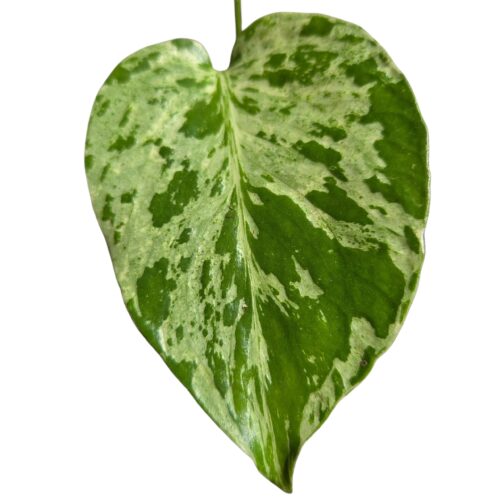
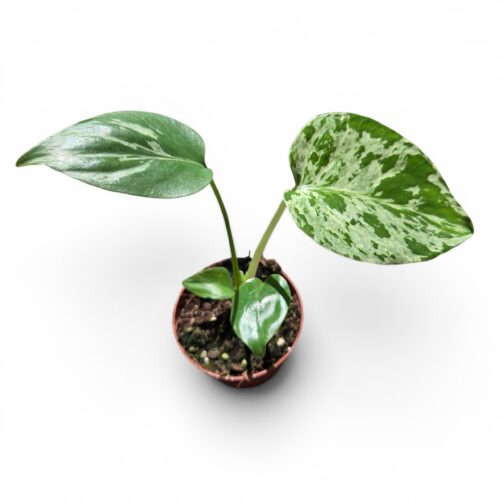
Monstera Adansonii Variegata, Baby Plant
Bisher bei uns Original price was: €24,77.€19,71Current price is: €19,71.
Includes 6% red. MwSt.
plus shipping

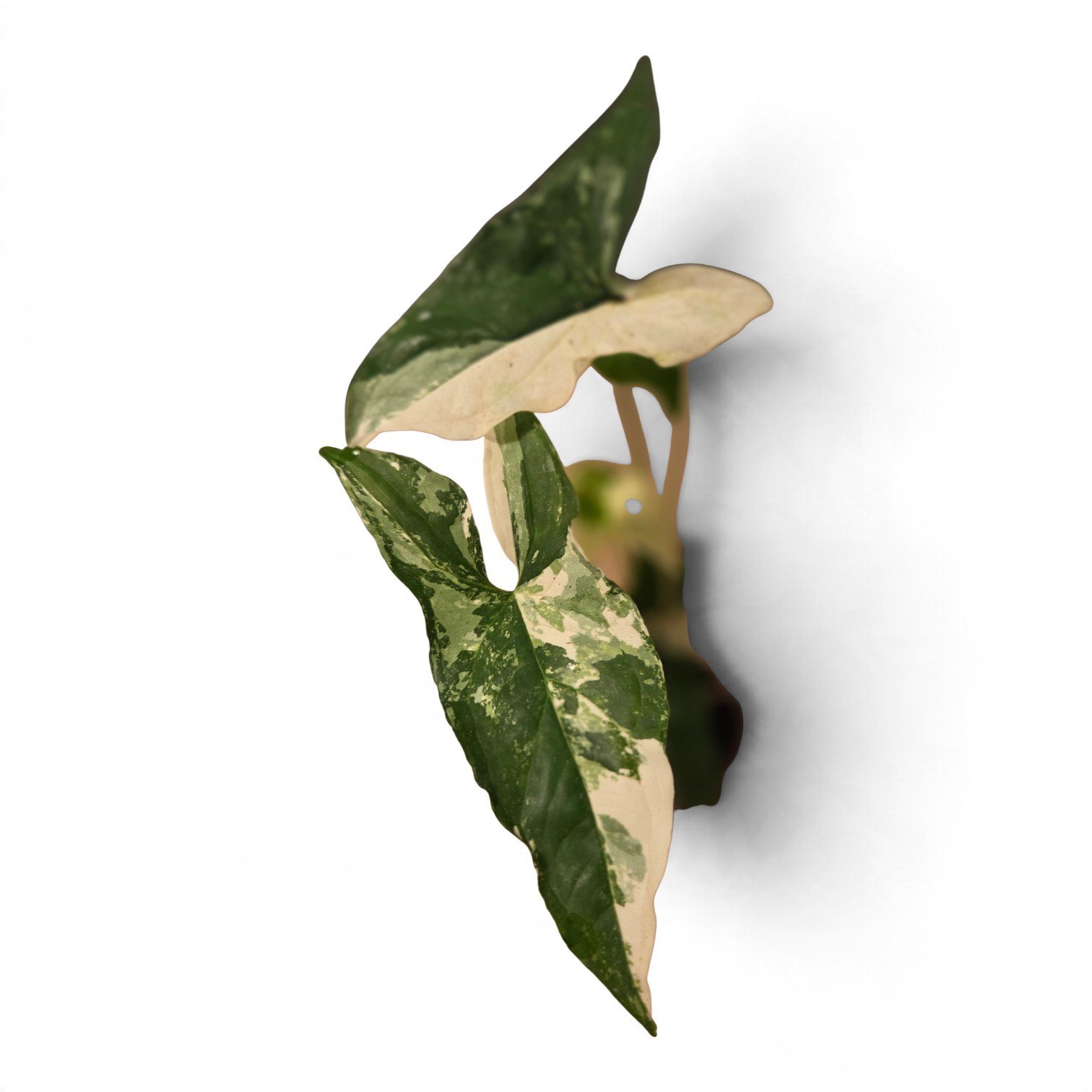
Syngonium Albo Variegata is a highly sought-after variegated houseplant with extraordinary green-and-white leaves and one-of-a-kind variegation. From fine white speckles to spectacular Half-Moon leaves, this rare arrowhead vine impresses with unique leaf patterns. Syngonium podophyllum Albo Variegata is easy to care for, grows climbing or trailing, and is ideal for bright spots with indirect light. Buy Syngonium Albo Variegata now and add a special tropical foliage plant to your collection.
Pot diameter: 9 cm
In stock
Syngonium Albo Variegata is an exceptional variegated houseplant that wows with its green-and-white leaves and unique variegation. The decorative, arrow-shaped leaves show high-contrast patterning in rich green and creamy white through to pure white. Variegation can range from fine speckles and marbled patterns to large white sectors.
Especially sought-after are leaves with pronounced Half-Moon variegation, where one half of the leaf is mostly white and the other green. Since every new leaf develops its own pattern, no two Syngonium Albo Variegata plants look the same.
With its elegant climbing habit and striking leaf patterning, Syngonium podophyllum Albo Variegata is one of the most popular collector plants among variegated aroids.
Syngonium podophyllum ‘Albo Variegatum’, usually sold as Syngonium Albo Variegata, belongs to the Araceae (aroid) family.
The original species Syngonium podophyllum comes from the tropical rainforests of Central and South America. There it grows as a climber up trees and, as it matures, develops larger, more deeply divided leaves.
The name “Albo Variegata” describes the characteristic white variegation, which is caused by areas in the leaf with little or no chlorophyll.
– Young plants with compact, bushy growth
– With age, climbing or vining
– Characteristic arrow-shaped leaves
– As plants mature, leaves become increasingly divided
– Forms aerial roots for climbing
– With a support, significantly larger leaves are possible
– Fast to moderate growth in good conditions
Young leaves often emerge light green at first and develop their final colour as they harden off. The white variegation can vary greatly in intensity.
Some leaves show fine green-and-white marbling, while others have larger white areas or a bold Half-Moon pattern.
With age, the leaf shape also changes. While young plants carry their typical arrow-shaped leaves, older climbing specimens can develop much larger, more deeply divided leaves.
– Striking green-and-white variegation
– Cream-white to pure-white leaf areas
– Marbled, speckled and sectoral patterns
– Highly sought-after Half-Moon leaves possible
– Every leaf uniquely patterned
– Attractive climbing growth
– Popular collector plant among variegated Syngoniums
Syngonium Albo Variegata differs from the also popular Syngonium Mojito mainly in the colour and expression of its variegation.
While Syngonium Mojito shows mostly green to light-green speckles and marbling, Syngonium Albo Variegata has characteristic cream-white to pure-white leaf areas.
Large white sectors and Half-Moon patterns are typical features that make Syngonium Albo Variegata so prized.
The white leaf areas contain little to no chlorophyll and can therefore do little to no photosynthesis. That’s why **Syngonium Albo Variegata** needs enough green leaf area to stay strong and healthy long term.
—
**Syngonium Albo Variegata** prefers a **bright to very bright spot with indirect light**.
– Lots of bright, indirect light
– Gentle morning or evening sun is possible
– Avoid intense midday sun
– Protect from cold drafts
Because of the white variegation, the plant needs plenty of light. At the same time, the chlorophyll-free areas are more sensitive to strong sun.
– Water as soon as the top 2–3 cm of the substrate has dried
– Keep evenly lightly moist
– Let excess water drain off completely
– Avoid waterlogging at all costs
– Water less in winter depending on growth
A loose, well-draining aroid mix is ideal.
A mix of high-quality houseplant soil, pine bark, coco chips, plus perlite or pumice provides good root aeration and prevents constantly wet conditions.
Around 50–70% humidity is ideal. With higher humidity, new leaves can unfurl especially well.
Always ensure sufficient air circulation.
Temperatures between 18 and 28 °C are ideal. Avoid prolonged temperatures below about 15 °C and cold drafts.
Syngonium Albo Variegata can be grown both trailing and climbing.
On a moss pole or other support, it often develops larger, more deeply divided leaves as it matures.
During the growing season, feed lightly about every 2–4 weeks with a balanced green-plant or aroid fertiliser.
– Brown white leaf areas: Often drought stress, intense sun, or irregular watering
– Yellow leaves: Often substrate that’s too wet
– Small leaves and long internodes: Too little light
– Pure green new growth: Possible reversion of the variegation
– Completely white new growth: Problematic long term because it lacks photosynthetically active leaf area
– Thrips and spider mites: Check the plant regularly
Not pet-friendly.
Like other aroids, Syngonium Albo Variegata contains insoluble calcium oxalate crystals. If ingested, these can cause irritation in the mouth and throat as well as digestive discomfort.
The plant is therefore toxic to cats, dogs and humans if eaten.
A relevant air-purifying effect under normal indoor conditions is not sufficiently proven scientifically.
Bisher bei uns Original price was: €24,77.€19,71Current price is: €19,71.
Bisher bei uns Original price was: €12,78.€8,82Current price is: €8,82.
Bisher bei uns Original price was: €34,67.€28,73Current price is: €28,73.