• No products in the cart.

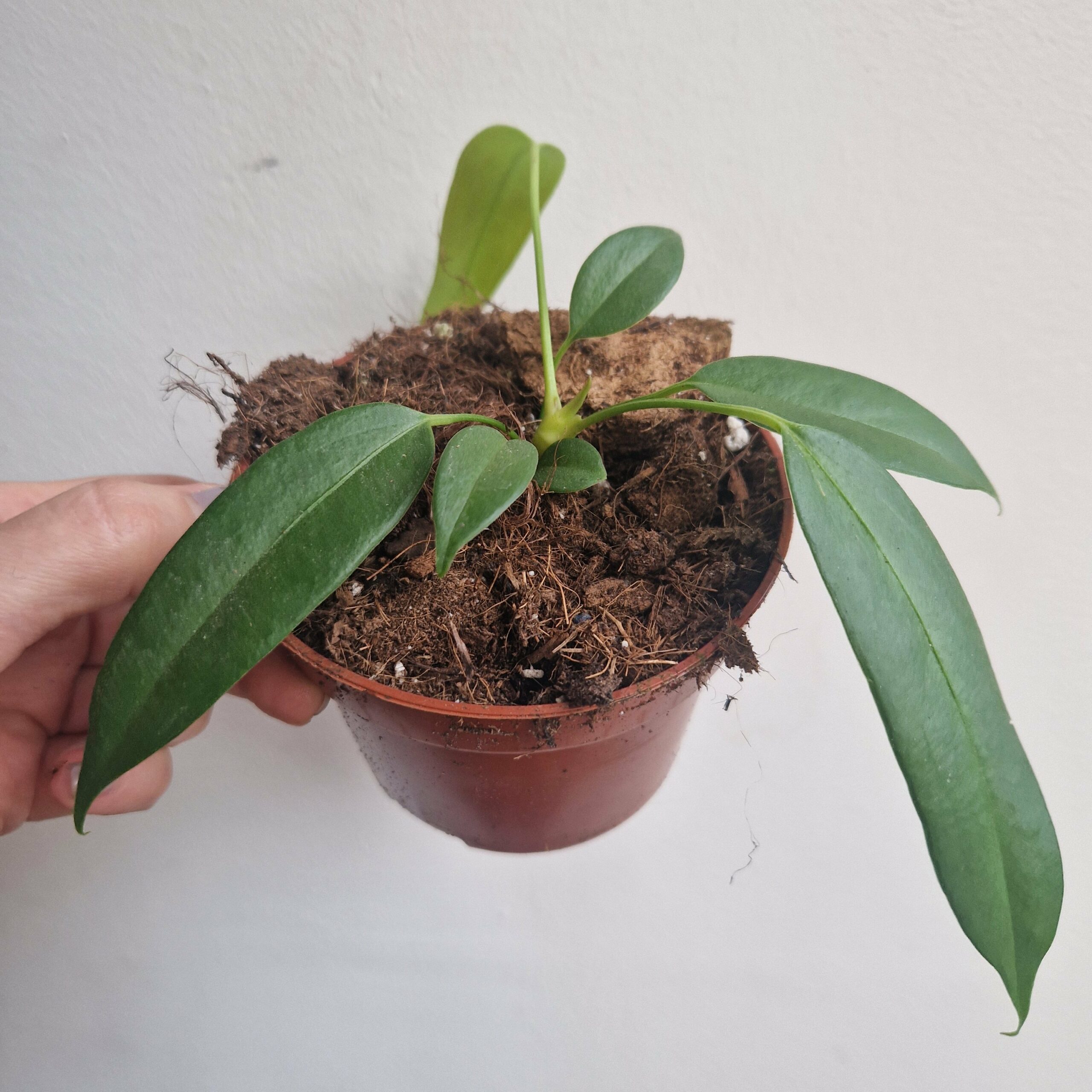
Anthurium Wendlingeri

34,90

Includes 7% red. MwSt.

Anthurium wendlingeri is a rare botanical species with long, cascading leaves and unusual corkscrew-like twisted inflorescences. This tropical trailing plant prefers high humidity, bright indirect light, and a very airy substrate.

Hanging pot diameter: 14 cm

Length: approx. 20 cm

Only 1 left in stock

Special features of Anthurium wendlingeri

Anthurium wendlingeri is one of the most extraordinary species in the Anthurium genus. It’s famous for its long, narrow, elegantly cascading leaves and, above all, for its spectacular spirally twisted inflorescences that resemble a corkscrew.

While many anthuriums are grown for their foliage, Anthurium wendlingeri is a real eye-catcher both in its vegetative and flowering stages. Its trailing growth habit really shines in hanging baskets or raised planters.


Origin & Botanical Background

Anthurium wendlingeri comes from the tropical rainforests of Central America, especially Costa Rica and Panama.

This species grows mainly as an epiphyte on trees in warm, humid forest regions.


Growth Habit & Size

  • Trailing to spreading growth
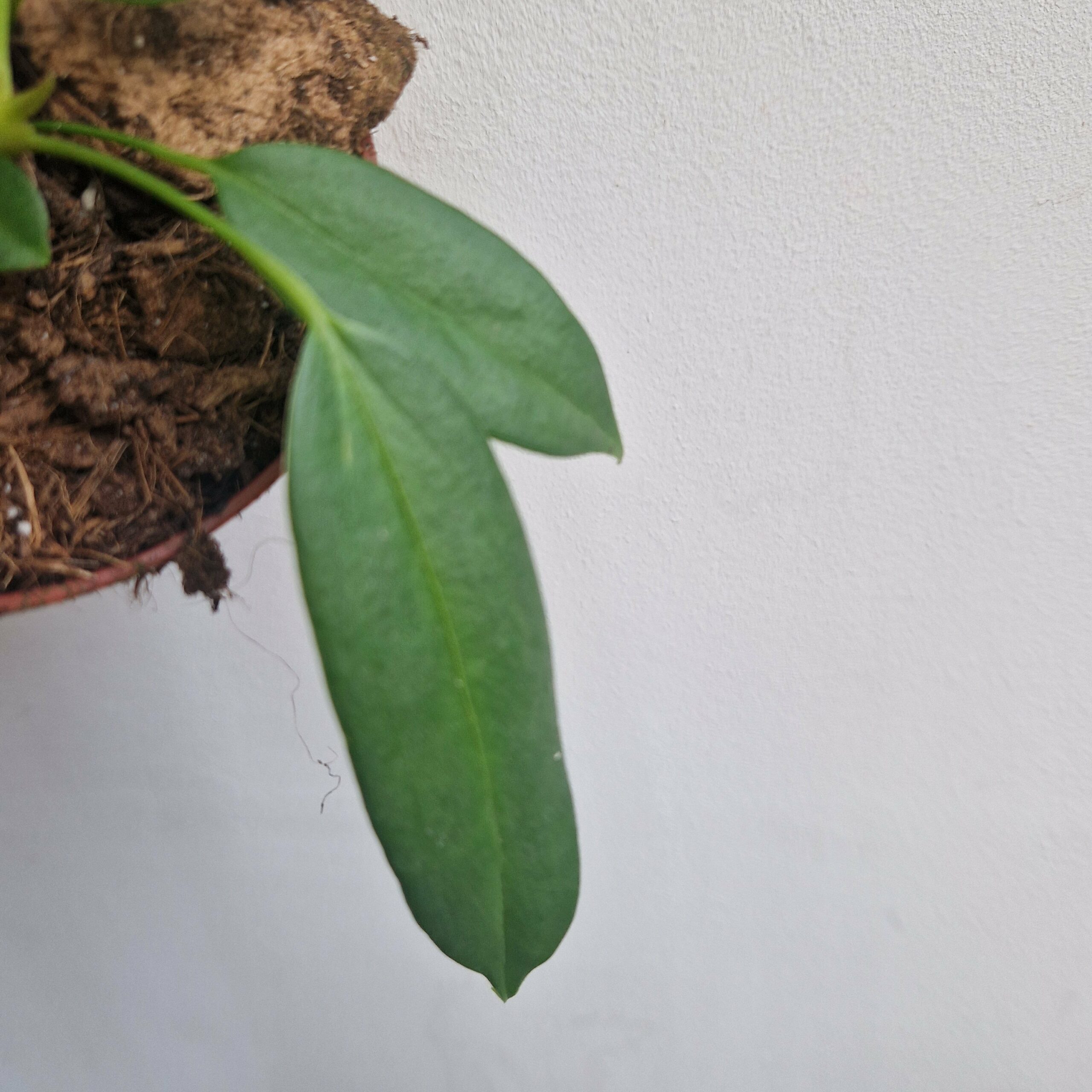
  • Long, strap-like leaves
  • Leaf length of 60–150 cm possible
  • Ideal for hanging baskets and elevated spots

Visual Development

  • Young plants initially grow more upright
  • As it matures, the leaves become significantly longer
  • Mature plants develop the characteristic spiral inflorescences

Special Features

  • Long, narrow trailing leaves
  • Spectacular corkscrew-like inflorescences
  • Epiphytic growth
  • Rare botanical collector’s species
  • Especially striking when grown in a hanging basket

Fun Fact

Anthurium wendlingeri is one of the few Anthurium species whose inflorescences twist into a spiral. This unusual shape makes it instantly recognizable, even among experienced collectors.


🌿 Care tips for Anthurium wendlingeri

Location

  • Bright without direct midday sun
  • Warm and consistent
  • No drafts

Light

Bright, indirect light promotes healthy growth and the development of large leaves.

Watering

  • Keep evenly lightly moist
  • Don’t let it dry out
  • Avoid waterlogging

Substrate

  • Very airy and coarsely structured
  • A mix of pine bark, perlite, sphagnum, and a little soil is ideal

Humidity

  • High, ideally above 65 percent

Fertilizing

Fertilize lightly every 2–3 weeks during the growing season.


Common Problems

  • Brown leaf tips → air too dry
  • Yellow leaves → too wet
  • Small leaf growth → too little light or nutrients

🐾 Pet Friendliness

Not pet-friendly

⚠️ Toxicity

Toxic to cats and dogs

🌬️ Air-Purifying Effect

Not proven

Cancel contract