- There are no products in the shopping cart.
Sale
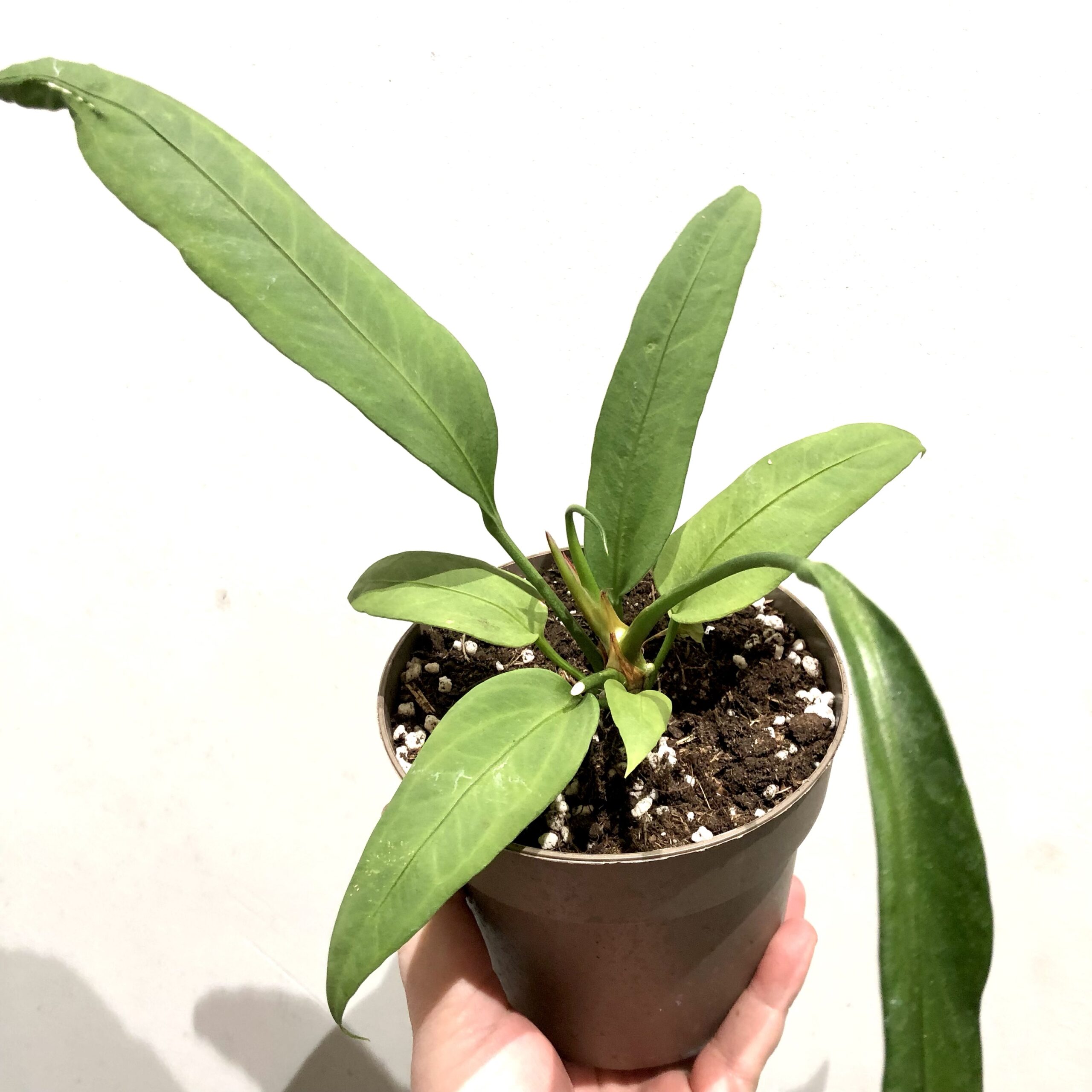
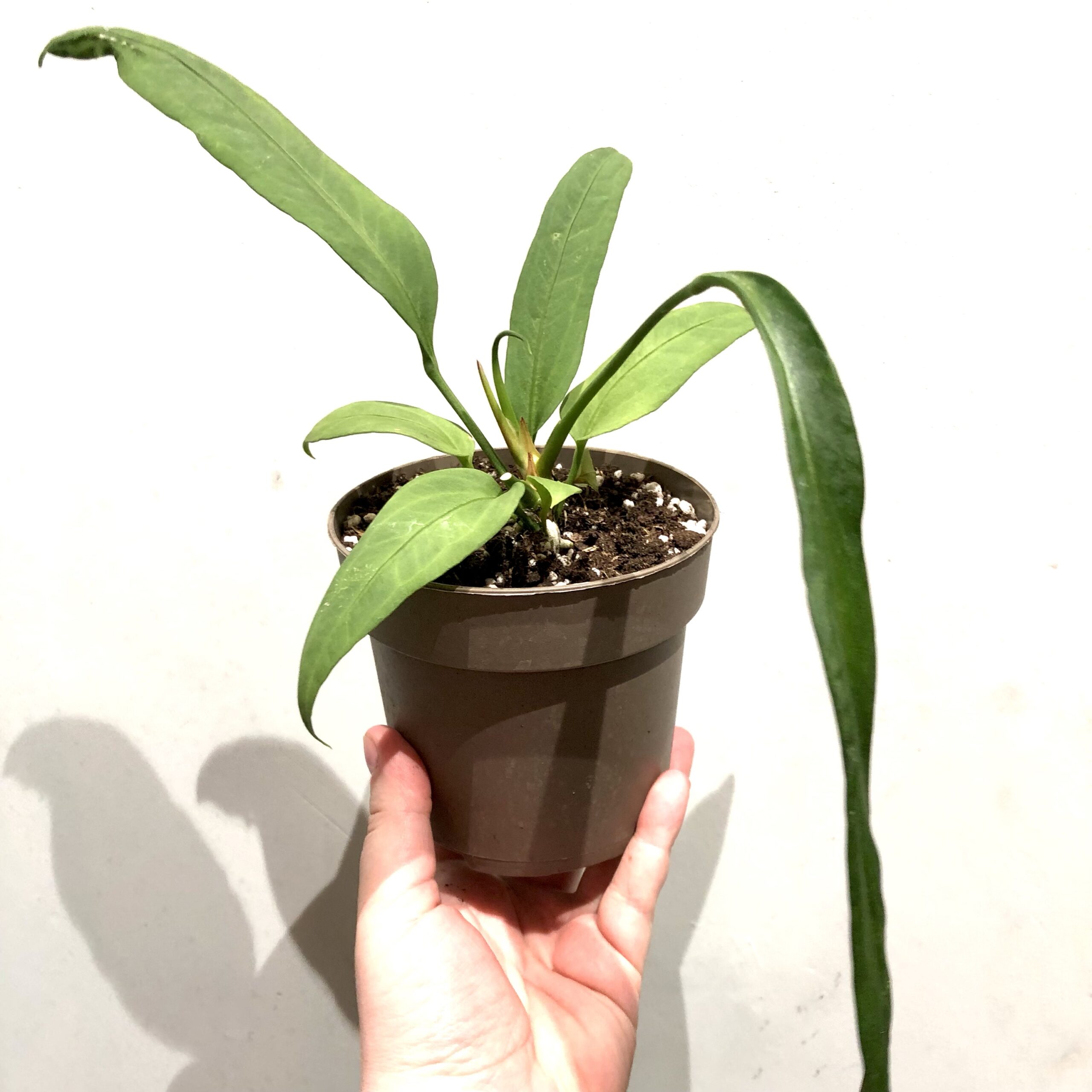
Anthurium Vittarifolium
So far with us Ursprünglicher Preis war: €49,00€24,90Aktueller Preis ist: €24,90.
Contains 7% reduc. VAT
plus shipping
Anthurium vittarifolium is a rare anthurium with very long, narrow leaves.
Diameter plastic pot: 10,5cm
Out of stock
Notify me when the product is available again
Anthurium Vittarifolium has a rather unusual growth habit among anthuriums: The narrow, dark green leaves grow incredibly long (up to 2 meters!). They then hang down, which is why this plant is best cultivated in a hanging pot.
Since this plant grows in the wild in the tropics, you should create tropical-like environmental conditions for it, i.e. the plant is best kept in a terrarium, a display case or in a room with high humidity. This plant should not be missing in any collection of rarities and rewards with its magnificent appearance when properly cared for!
Water requirement: The substrate should be kept constantly moist, but not too wet!
Light requirements: Bright, no direct sunlight
Humidity: Above average, between 60 % and 80 %, best in a terrarium with good air circulation
Toxicity: Po isonous
Similar products
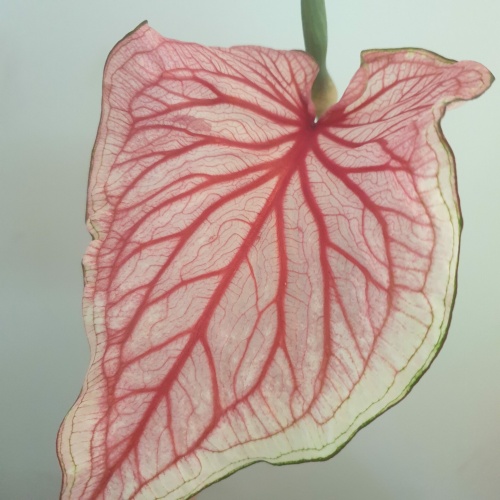
Caladium-Knolle Florida Sweetheart
MSRP: Ursprünglicher Preis war: €9,99€8,50Aktueller Preis ist: €8,50.
Contains 7% reduc. VAT
plus shipping